
Clean Compressed Air: define the operating context before choosing hardware
Compressed-air system selection starts at the points of use. Required pressure, minimum/average/peak demand, demand profile, air-quality requirement, ambient conditions, cooling, electrical supply, receiver/storage and treatment pressure drops should be considered together.
- Pressure at point of use
- Minimum / average / peak flow
- Demand profile and operating hours
- Air quality / dew point / filtration
- Ambient, ventilation and cooling
- Electrical supply, controls and redundancy
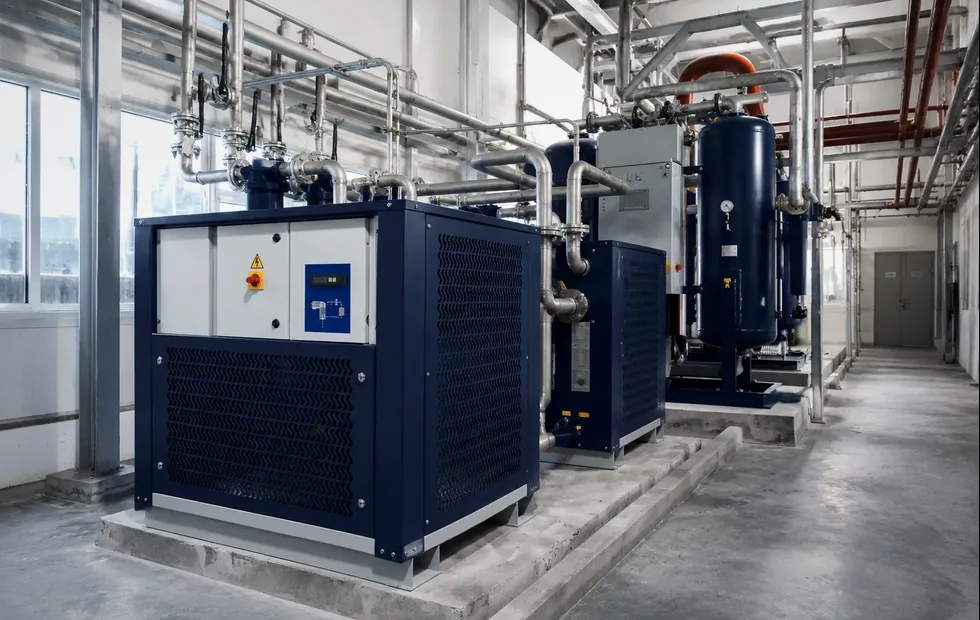
Record normal operation and the events that create peaks
Average load is rarely enough for selection. Document startup, stopping, turning, reversing, plugging, batch transitions, pressure or concentration excursions and any event that creates a short-duration peak. State how often the event occurs and whether it is acceptable for a protection device to interrupt the drive or process.
Also record operating hours and maintenance conditions. A clean continuous indoor drive and a dusty outdoor machine may need different protection, lubrication and inspection even when nominal speed and power are similar.
Freeze the boundaries that cannot change
Identify every shaft, spline, flange, mounting face, pin center, hydraulic port, duct, electrical supply, cooling connection or control signal that links the proposed product to the existing system. Where movement changes geometry, show the minimum and maximum positions. Where a connection is fixed, identify its controlling dimension or standard.
For replacements, include the current model/part marking and measured interfaces. For new designs, provide the latest machine or process drawing. Mark assumptions visibly so they cannot be mistaken for released dimensions.
Review the product as part of the system
Integration checks should connect the proposed product to the surrounding machine or process. Review the complete load path, the protection method and the maintenance route together; a product that satisfies one of those fields but conflicts with another can create installation or lifecycle problems that a catalogue rating alone will not reveal.
Load path
Trace where torque, force, pressure, flow or heat enters and leaves the selected product.
Protection
Identify guarding, overload, filtration, sealing, safety interlocks or other protection tied to the real hazard/failure mode.
Service
Confirm lubrication, inspection, cleaning, access, spares and the consequences of stopping the machine or process.
Put the operating data and interfaces in one file
- Pressure at point of use
- Minimum / average / peak flow
- Demand profile and operating hours
- Air quality / dew point / filtration
- Ambient, ventilation and cooling
- Electrical supply, controls and redundancy
Add quantity, destination, requested delivery context and the acceptance information your team actually needs. If there is a failure history, include the symptom and operating event so the review does not simply replace a component without checking the system cause.
Clean Compressed Air review questions
Can you select from a photograph?
A photograph helps identify the equipment and orientation, but measurable interfaces and operating duty are still needed for a controlled selection.
Should peak conditions be included?
Yes. Record credible short-duration peaks, starts, reversals, jams or process excursions separately from normal operation.
What becomes the final purchase reference?
The released drawing, configuration or scope document should control the order, with open items closed before production.
Include service conditions in the original selection
Access, lubrication, filtration, cleaning, inspection interval, spare strategy and the consequence of downtime can change the preferred configuration. Record where the product sits in the machine, what has to be removed for service and whether contamination or weather affects routine work. A technically capable component that cannot be inspected or lubricated in the installed position may create avoidable lifecycle problems.
For replacements, document the old unit’s wear or failure pattern. For new systems, define the first inspection/commissioning checks so abnormal temperature, vibration, leakage, looseness, wear or process behaviour can be detected before it develops into repeated failure.
What the supplier response should return
Ask the supplier to return a proposed model/family, the configuration assumptions, the key interfaces, any open confirmation item and the drawing or document that will control production. Where several components interact, the response should identify which interfaces are assumed to be supplied by others. This makes responsibility clear and avoids discovering an incompatible bore, flange, port, duct or utility connection during installation.
After engineering approval, retain the released document with the purchase order and installation record. That single reference helps purchasing reorder the correct configuration and gives maintenance a reliable baseline when troubleshooting later.
Capture operating ranges instead of one nominal point
A supplier can only review the conditions that appear in the enquiry. Record the normal operating range, the most severe credible event and how often it occurs. If the machine or process changes modes, list the modes separately. For measurements taken in the field, identify the instrument or drawing reference, unit and location. Where values are not available, mark them as open items instead of replacing them with typical numbers.
| Data group | Questions to answer | Why it matters |
|---|---|---|
| Operating range | What is normal, minimum, maximum and transient? | Separates steady-state sizing from peak-event protection. |
| Interfaces | Which dimensions, ports, splines, flanges, ducts or utilities are fixed? | Prevents a technically capable product from being impossible to install. |
| Environment | What temperature, dust, moisture, corrosion, washdown or process contamination exists? | Changes materials, sealing, lubrication, filtration and inspection needs. |
| Maintenance | How is the item accessed, isolated, lubricated, cleaned or replaced? | Ensures service requirements are realistic in the installed system. |
When the application has a failure history, add the event sequence: what the machine was doing, the observed symptom, where damage appeared and whether any surrounding condition changed. This information can be more useful than the failed part number because it helps identify misalignment, overload, contamination, incorrect adjustment or another system cause that would otherwise damage the replacement again.
Close open questions before ordering
A technically complete response should distinguish the offered configuration from the remaining questions. Before a purchase order is released, check the final model or family, the controlling drawing/scope, critical interfaces, duty used for selection, included accessories or protection devices and the acceptance evidence. If any field remains provisional, state who will supply the missing information and when it must be closed.
For multi-component systems, keep the same interface and duty data across every related order. If one drawing changes, review the connected shaft, sprocket, gearbox, cylinder or machine connection rather than updating only the part that was easiest to edit. That discipline reduces late installation conflicts and makes later maintenance records much easier to interpret.