Air Compressors
Evidence-backed overview, product subfamilies, selection variables and RFQ preparation.
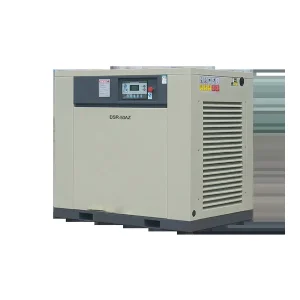
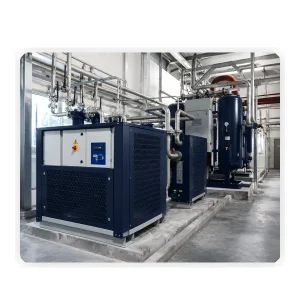
Air Compressors selectionAir Compressors: choose the family, then prove the interfacesCompressed-air selection starts at the users, not at the compressor nameplate. Required pressure at the points of use, minimum/average/peak flow, demand profile, operating hours, ambient temperature, cooling, electrical supply, water/condensate handling, redundancy and the required air-quality result define the system. The selected HZPT product family includes water-lubricated oil-free screw configurations with fixed- and variable-speed variants.Required pressure at point of useMinimum, average and peak flowHourly / daily / weekly demand profileAmbient, ventilation and cooling conditionsElectrical supply and control integrationAir-quality, drying, filtration and redundancy needsCommon product familiesFrequently requested air compressors familiesThese are routing families for the enquiry. They help a buyer reach the right technical checklist without pretending that one family description defines every model.Water-lubricated oil-free screwOil-free compression architecture using water in the compression process; site utilities and water management are part of the system review.Fixed-speed familyConfiguration suited to steadier demand when control philosophy and load/unload behaviour are compatible with the air system.Variable-speed familySpeed-controlled family used where the demand profile benefits from modulation; turndown and system storage still require review.Drying / filtration integrationDownstream equipment selected from pressure dew point, contamination sensitivity, ambient conditions and end-use requirements.Plant air systemCompressors, receiver/storage, treatment, controls and distribution assessed together to avoid solving one point while creating another pressure drop.Application & compatibilityDescribe the duty that changes the answerManufacturing, instrumentation, electronics, food/process or general plant air can have different purity and continuity requirements. Measure or estimate the demand profile rather than selecting from peak flow alone. Identify pressure losses in treatment and piping, whether multiple compressors will sequence together, and how maintenance will be covered. Where air quality is critical, define the required result at the point of use instead of relying on a generic “oil-free” statement.For a technically complete enquiry, identify which of these families is closest—Water-lubricated oil-free screw, Fixed-speed family, Variable-speed family, Drying / filtration integration, or Plant air system—and then describe the actual operating conditions. The family name is only a routing decision. The released product still depends on the drawing, mating components and duty. If a current part is being replaced, record the designation exactly as marked and add measured data that can detect an incorrect or superseded identification.Procurement should separate confirmed, derived and unknown values. Confirmed dimensions come from the controlling drawing or direct measurement; derived values should show the calculation basis; unknown values should be listed as questions for HZPT engineering. That discipline makes supplier responses comparable and prevents a nominal catalogue value from becoming an accidental purchase requirement.Evidence boundaryWhat this category can state—and what still belongs in the RFQCurrent HZPT pages establish the product identity and family names. A separate compressor brochure in the source set is used only as compatible technical context where it matches the HZPT family; its third-party branding is not republished as HZPT imagery.A category page is therefore an engineering map, not a substitute for a released product drawing. Numerical values shown on a product page or technical table should be read within that exact series and configuration. When a value controls fit, safety, performance or acceptance, repeat it in the enquiry and ask the quotation to reference the same revision.RFQ checklistSelection variables to put on the enquiryUse one marked-up drawing or worksheet so each variable has a value, unit and source. If the machine has several operating modes, identify the normal case and the credible peak or upset case separately.1. Required pressure at point of use2. Minimum, average and peak flow3. Hourly / daily / weekly demand profile4. Ambient, ventilation and cooling conditions5. Electrical supply and control integration6. Air-quality, drying, filtration and redundancy needsReplacement tip: include photos of both mating interfaces, but do not use a photograph scale as the only dimensional evidence. Hidden shoulders, splines, port threads, bolt circles and working movement often determine interchangeability.Receiving & releaseMake the final order measurableBefore production or shipment, confirm which document controls the configuration and which items the buyer will inspect. A strong purchase description names the drawing revision, material/finish only where it matters, critical interface dimensions, functional duty and any inspection or reporting requirement. Avoid copying unrelated certificates or performance claims into the order; ask for evidence tied to the actual feature you need.Drawing revisionUse one released drawing or configuration sheet as the baseline.InterfacesList the dimensions and connection features that determine fit.DutyRecord the normal range and credible peaks or transients.AcceptanceState the dimensions, functional checks or documents needed at receipt.Additional engineering / inspection view for this product family.Supplier reviewAsk the quotation to state what is selected and what remains openA useful supplier response should identify the proposed family or model, summarize the duty and interfaces used for selection, and list every value that still needs confirmation. It should also identify the drawing or data sheet that will control production. That makes technical comparison easier when two quotations use different catalogue naming or when a replacement part has evolved from the original designation.Before approval, check that the offer has not silently substituted a nominal or “typical” value for a dimension, duty or material requirement that your application actually controls. If a deviation is acceptable, record it deliberately in the released document instead of relying on a conversation that will not be visible at receiving inspection.FAQAir Compressors enquiry questionsCan HZPT quote from a photo or old model number only?Those references help identify the family, but a reliable replacement review also needs measurable interfaces and the machine or process duty.Why are some values left as “confirm”?Because the selected evidence does not support one universal value for every configuration. Leaving the item open is more accurate than inventing a number.What should be approved before release?Approve the controlling drawing or configuration, interfaces, application duty, required material/finish where applicable, and the acceptance scope.Where is the quotation form?The same engineering RFQ form appears in the global footer on every public page, so the category data can be submitted without navigating away from the current context.Next step: use the engineering selection workflow to turn the category checklist into a drawing-controlled RFQ.
Published products in this family
Use the product page for the evidence-backed specification scope; application-dependent values remain part of the RFQ review.