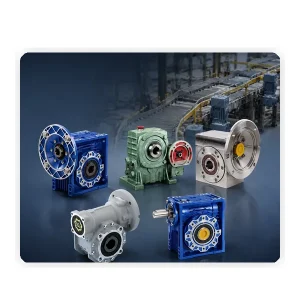
Gearboxes
Evidence-backed overview, product subfamilies, selection variables and RFQ preparation.
Gearboxes selectionGearboxes: choose the family, then prove the interfacesGearbox selection ties ratio and torque to a physical mounting interface. Input speed/power, output speed/torque, service factor or duty, mounting position, shaft/bore/flange geometry, backlash or precision requirement and lubrication all need to be reviewed together. The selected HZPT JDLB precision worm-gearbox catalogue provides model-level evidence for that family while the wider category includes other reducer architectures.Input speed and power / torqueRequired ratio and output speedContinuous, intermittent and shock dutyMounting position and available envelopeInput/output shaft, bore or flange interfaceBacklash, lubrication and acceptance checksCommon product familiesFrequently requested gearboxes familiesThese are routing families for the enquiry. They help a buyer reach the right technical checklist without pretending that one family description defines every model.Agricultural gearboxesImplement gearboxes selected around tractor/PTO speed, implement duty, mounting and output shaft arrangement.Worm gearboxesRight-angle reduction with a worm/wheel set; ratio, thermal duty, orientation and backlash/service requirement matter.Planetary gearboxesCoaxial high-torque reducer architecture where ratio, carrier/output interface and duty cycle define the unit.Helical reducersParallel or coaxial helical gearing for efficient industrial reduction; mounting and service factor need confirmation.Bevel / bevel-helical gearboxesRight-angle transmission combining bevel geometry with additional reduction stages where input/output orientation is critical.Application & compatibilityDescribe the duty that changes the answerA nominal ratio does not prove interchangeability. When replacing a gearbox, include the existing model, mounting dimensions, shaft/bore details, rotation directions, motor interface and driven-machine connection. When sizing a new unit, supply the load inertia, starts per hour, reversals, ambient temperature, duty cycle and any overhung/radial load so the reducer can be reviewed beyond its catalogue ratio.For a technically complete enquiry, identify which of these families is closest—Agricultural gearboxes, Worm gearboxes, Planetary gearboxes, Helical reducers, or Bevel / bevel-helical gearboxes—and then describe the actual operating conditions. The family name is only a routing decision. The released product still depends on the drawing, mating components and duty. If a current part is being replaced, record the designation exactly as marked and add measured data that can detect an incorrect or superseded identification.Procurement should separate confirmed, derived and unknown values. Confirmed dimensions come from the controlling drawing or direct measurement; derived values should show the calculation basis; unknown values should be listed as questions for HZPT engineering. That discipline makes supplier responses comparable and prevents a nominal catalogue value from becoming an accidental purchase requirement.Evidence boundaryWhat this category can state—and what still belongs in the RFQJDLB technical data can support that model family, including configuration/adjustment context. Other gearbox types remain family-level until a selected catalogue or released drawing supports model-specific values.A category page is therefore an engineering map, not a substitute for a released product drawing. Numerical values shown on a product page or technical table should be read within that exact series and configuration. When a value controls fit, safety, performance or acceptance, repeat it in the enquiry and ask the quotation to reference the same revision.RFQ checklistSelection variables to put on the enquiryUse one marked-up drawing or worksheet so each variable has a value, unit and source. If the machine has several operating modes, identify the normal case and the credible peak or upset case separately.1. Input speed and power / torque2. Required ratio and output speed3. Continuous, intermittent and shock duty4. Mounting position and available envelope5. Input/output shaft, bore or flange interface6. Backlash, lubrication and acceptance checksReplacement tip: include photos of both mating interfaces, but do not use a photograph scale as the only dimensional evidence. Hidden shoulders, splines, port threads, bolt circles and working movement often determine interchangeability.Receiving & releaseMake the final order measurableBefore production or shipment, confirm which document controls the configuration and which items the buyer will inspect. A strong purchase description names the drawing revision, material/finish only where it matters, critical interface dimensions, functional duty and any inspection or reporting requirement. Avoid copying unrelated certificates or performance claims into the order; ask for evidence tied to the actual feature you need.Drawing revisionUse one released drawing or configuration sheet as the baseline.InterfacesList the dimensions and connection features that determine fit.DutyRecord the normal range and credible peaks or transients.AcceptanceState the dimensions, functional checks or documents needed at receipt.Additional engineering / inspection view for this product family.Supplier reviewAsk the quotation to state what is selected and what remains openA useful supplier response should identify the proposed family or model, summarize the duty and interfaces used for selection, and list every value that still needs confirmation. It should also identify the drawing or data sheet that will control production. That makes technical comparison easier when two quotations use different catalogue naming or when a replacement part has evolved from the original designation.Before approval, check that the offer has not silently substituted a nominal or “typical” value for a dimension, duty or material requirement that your application actually controls. If a deviation is acceptable, record it deliberately in the released document instead of relying on a conversation that will not be visible at receiving inspection.FAQGearboxes enquiry questionsCan HZPT quote from a photo or old model number only?Those references help identify the family, but a reliable replacement review also needs measurable interfaces and the machine or process duty.Why are some values left as “confirm”?Because the selected evidence does not support one universal value for every configuration. Leaving the item open is more accurate than inventing a number.What should be approved before release?Approve the controlling drawing or configuration, interfaces, application duty, required material/finish where applicable, and the acceptance scope.Where is the quotation form?The same engineering RFQ form appears in the global footer on every public page, so the category data can be submitted without navigating away from the current context.Next step: use the engineering selection workflow to turn the category checklist into a drawing-controlled RFQ.
Published products in this family
Use the product page for the evidence-backed specification scope; application-dependent values remain part of the RFQ review.