
Technical buying in mechanical equipment usually fails when the enquiry begins from appearance instead of operating reality. A better process starts by defining what the machine must do, the interface dimensions that cannot change, the working duty, and the environmental risks that will influence design life. This article explains the information that should be gathered before asking for quotation so that the supplier can respond with something technically relevant rather than merely commercially attractive.
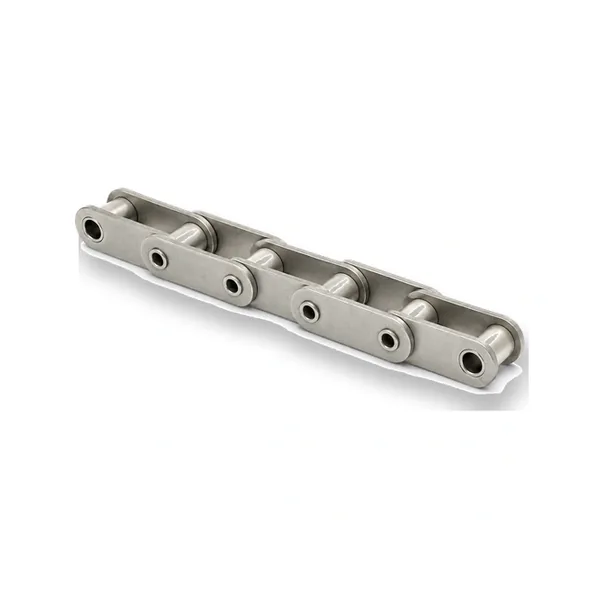
1. Start from function, not from a catalogue thumbnail
One of the most common reasons for misquotation is the use of incomplete labels such as ‘same as current’, ‘heavy duty’, or ‘standard model’. Those labels may be useful internally, but they do not tell the receiving engineer enough about load, speed, mounting, temperature, contamination, alignment, or service severity. The result is usually a long clarification cycle or a proposal that looks comparable at first glance but fails to reflect the actual application.
For example, a product that looks similar in a web listing may differ in tooth count, bore finish, rod end, ratio, joint style, cooling arrangement, or control scope. Those details influence performance, compatibility, and life. The faster the buying team moves from a visual description to a measured technical description, the more useful the response from the supplier becomes.
2. Identify the fixed interfaces first
Interfaces are the parts of the system that usually cannot change without redesign. They include bores, shafts, keyways, flange drillings, port threads, retracted lengths, mounting pins, working envelopes, bale output requirements, utility connections, and transport constraints. If the interface is fixed, it should be documented before discussions about optional features begin.
- Measure both mating sides, not only the component being replaced.
- Capture the dimensions in a simple marked sketch.
- Photograph all labels, wear marks, orientation arrows, and connection points.
- Note whether any adapter, bushing, key, coupling, or guard is already part of the system.
3. Translate operating experience into engineering data
The most dependable method is to work through the project in layers. First define the function: what must be moved, transmitted, compressed, oxidized, baled, crushed, or actuated. Then define the interfaces: shafts, splines, bores, mounts, ports, flanges, working lengths, guard envelopes, and service clearances. Third, define the duty: load spectrum, speed, start frequency, pressure, throughput, seasonal variation, and the acceptable maintenance interval. Finally, define the external context: dust, moisture, washdown, corrosion, utilities, inspection, documentation, and destination market. When these four layers are documented clearly, technical evaluation becomes faster and much more consistent.
In many factories and field operations, the most valuable data already exists in the maintenance team. Operators know whether the machine starts under load, whether torque spikes occur, whether seals are exposed to fertilizer slurry, whether the drive reverses frequently, and whether the system operates all year or only during a short season. Turning those observations into structured enquiry data dramatically improves selection accuracy.
4. Build a service-duty profile
A service-duty profile should explain more than the maximum rating. Include the normal running band, peak demand, start frequency, shock events, overload history, and the acceptable maintenance interval. In hydraulic systems, note the working pressure and speed. In driveline systems, note the transmitted power, torque, and the amount of misalignment or articulation. In process equipment, state throughput, operating hours, utilities, and the cost of unplanned downtime.
When the duty profile is incomplete, the quoting engineer must assume worst-case or average-case conditions. Either assumption can hurt the buyer: worst-case assumptions may inflate cost, while average-case assumptions may understate the robustness needed. The more specific the duty profile becomes, the more practical the proposal becomes.
5. Environmental conditions are part of the design brief
Dust, crop residue, washdown, rain exposure, fertilizer contamination, ambient heat, cold starts, and corrosive vapors all affect product choice. These variables influence lubrication, sealing, coating, material selection, and maintenance intervals. For SEO content, this is also where user intent broadens: many buyers search by condition, such as “chain for dusty conveyor”, “hydraulic cylinder for agriculture”, or “gearbox for washdown area”, not only by product name.
6. Prepare the quotation package in a repeatable format
A repeatable quotation package saves time for both sides. A good package usually includes a brief application summary, a dimensioned sketch or drawing, photographs, the operating-duty profile, quantity and delivery expectations, destination country, and any inspection or certification requirement. If this format is used consistently, sourcing decisions become easier to compare across projects and across suppliers.
- Application summary: machine, function, and objective.
- Fixed interfaces: dimensions, ports, bores, shafts, mounts, or transport limits.
- Duty profile: load, speed, pressure, temperature, hours, starts, and shock level.
- Environment: contamination, weather, washdown, corrosion, and site conditions.
- Commercial frame: quantity, schedule, destination, and required documents.

7. Common mistakes that reduce quotation accuracy
A weak enquiry often creates the same pattern of errors. Buyers send a single product photo with no measured dimensions. Operators remember only the nominal machine model, not the actual installed variant. Teams focus on price before clarifying whether the mounting interface is fixed or adjustable. Maintenance records exist, but they are not translated into design information such as wear pattern, overload events, oil temperature, or duty severity. Correcting those mistakes early is easier than solving them after a part reaches site and fails to fit.
Another frequent mistake is mixing verified data with assumptions without clearly labelling which is which. If a dimension was measured, say so. If it was estimated from a photo, say so. If the load case comes from operator memory rather than from a recorded log, say so. That honesty helps the supplier understand the confidence level of the enquiry and focus on the right risks.
8. How to turn long-form content into better industrial SEO
From an SEO perspective, strong industrial pages must reflect real user intent. Buyers are not only searching for the product name; they are looking for compatible interfaces, replacement guidance, failure analysis, installation steps, and quotation checklists. That means each article should answer practical questions with specific terminology, structured headings, scannable tables or lists, and context-rich examples. Long-form educational content works when it converts browsing traffic into technically complete enquiries.
High-quality industrial SEO content also benefits from semantic breadth. In a single article, relevant related language may include dimensions, interfaces, service factor, lubrication, wear, reverse engineering, replacement, inspection, maintenance, process duty, installation, commissioning, and troubleshooting. When these concepts are woven into a genuinely useful technical guide, the page becomes more discoverable without sacrificing accuracy.
9. Practical checklist for the buying team
- Confirm the exact machine or process function.
- List the dimensions and interfaces that cannot change.
- Describe the operating duty in measurable terms.
- State the environment and maintenance expectations.
- Capture clear photographs of labels, interfaces, and overall context.
- Provide quantity, destination, and project timing.
- Flag any inspection, certification, or compliance needs.
10. Conclusion
The practical objective is not just to publish a longer article. It is to reduce ambiguity between the buyer, the engineering reviewer, and the supplier. When a page explains what data matters, why it matters, and how to collect it, it becomes more valuable to both search engines and decision makers. Use the checklist in this article to improve internal preparation, then send the gathered drawings, dimensions, service data, and quantity plan through the enquiry channel so the quotation can focus on technically relevant options.
Frequently asked questions about Roller Chain Failure Analysis and Preventive Maintenance
Why is a drawing more useful than a marketing photo?
A drawing defines the measurable interface, while a marketing photo mainly shows appearance. Even a simple marked sketch is often enough to eliminate basic fit-risk questions.
What if the buyer only has an old part and no drawing?
In that case, provide dimensional measurements, multiple photos, and notes about wear, performance, and failure history. A sample can be a strong starting point, but context about service conditions is still needed.
How much performance data is enough?
Enough data to identify the normal duty band, the overload risk, and the environmental influences. Buyers do not always need laboratory-level datasets, but they should avoid broad labels such as “heavy duty” without explanation.
Should destination and documentation requirements be part of the first enquiry?
Yes. Destination can influence packaging, inspection, documentation, and schedule planning. Mentioning it early avoids preventable delays later in the project.
For teams building a repeatable sourcing process, it can be useful to create a small internal template based on this article. The template should have fields for the product family, machine or process, fixed interfaces, operating duty, environment, quantity, destination, and evidence sources such as drawings, photos, or maintenance records. Once the template becomes part of normal practice, the quality of sourcing conversations improves quickly.
That improvement has a second-order effect on website performance. When content mirrors real technical decision-making, user engagement tends to improve because visitors find concrete answers instead of generic promotional language. Lower bounce rates, longer dwell time, and stronger topical authority are natural by-products of content that genuinely solves the visitor’s problem. In industrial SEO, authority is built through clarity and usefulness, not through keyword repetition alone.
11. Internal coordination between purchasing, maintenance, and engineering
Industrial sourcing becomes more accurate when the internal contributors share one technical language. Purchasing often knows the timing and budget pressure, maintenance knows the failure history and the work-arounds used in the field, and engineering understands the design intent and performance limits. When those perspectives stay separate, the enquiry usually lacks context. One team sends the part number, another team remembers that the mounting space is constrained, and a third team knows the machine is regularly overloaded, but the supplier receives only fragments.
A simple cross-functional review can eliminate many of those gaps. Ask maintenance what actually failed. Ask engineering which dimensions truly cannot change. Ask operations which duty cycle is normal and which extreme events happen only occasionally. Ask purchasing what commercial constraints are fixed, such as destination, packaging, or document format. That short coordination meeting often produces better data than a long email chain sent after a quote has already been requested.
12. Verification steps before a component or equipment page goes live
From a website-quality standpoint, every product or article page should be checked against the same publishing standard. The title should match the buyer intent. The introduction should explain the application context. The body should define the variables that control selection. Images should support the explanation rather than acting as decorative filler. If dimensions, ratings, or compatibility are not fully approved, the page should state that final confirmation depends on the selected configuration and the submitted evidence.
For SEO, consistent structure matters. Search engines respond well when pages contain strong topical depth, internal links to related categories or guides, and content that answers real pre-sales questions. For users, consistency matters because it reduces friction: buyers can scan one article, understand the checklist, and apply the same logic when reading another product family page.
13. What evidence should be attached to the first enquiry?
The strongest evidence package usually contains several types of information working together. A drawing shows the interface. A photo shows the context and condition. A maintenance note explains the failure history. A short written summary clarifies the machine function, throughput target, or process objective. If only one type of evidence is supplied, uncertainty remains high. If two or three types support one another, technical review becomes far more reliable.
- Dimensioned sketch or approved drawing
- Photos of the full assembly and of both interfaces
- Nameplate or label images
- Basic operating-duty information
- Notes about failure mode, wear, or planned design change
- Quantity, schedule, and destination country
Buyers sometimes worry that they do not have perfect documentation. In practice, a clearly labelled partial package is much better than an overconfident minimal package. It is acceptable to say that a dimension is estimated, a speed is approximate, or a pressure value is still being verified. That transparency helps the engineering reviewer judge where more data is required and where a workable preliminary response can already be prepared.
14. Long-term content value and commercial value
Well-structured industrial content has value beyond one quotation. It becomes part of the company’s sales enablement system. New staff can use it as a checklist. Distributors can use it to pre-qualify opportunities. Customers can use it to understand what information they should collect before contacting the supplier. Over time, the site becomes more than a brochure; it becomes a technical filter that improves lead quality. This is exactly the kind of utility that supports sustainable SEO performance because it aligns the content with real operational questions.
In practical terms, the best pages do three things at once. They help search engines understand the topic cluster. They help buyers understand the data needed for selection. And they help the sales and engineering team receive better prepared enquiries. When those three outcomes are aligned, the page delivers much stronger business value than a short generic write-up with a single stock image.